
Dentures for Seniors
January 24, 2025
Dentures for Seniors: A Smile That Will Change Your Life
Dental Services
Professional Contributor
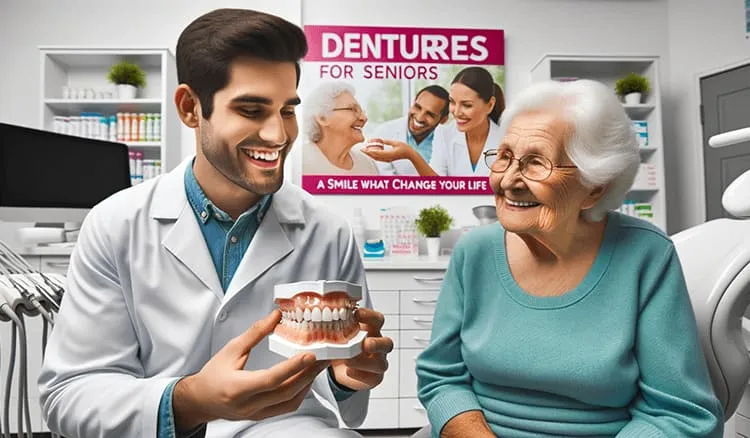
The Benefits of Dentures for Seniors
- Dentures restore confidence by improving a senior's appearance and smile.
- Dentures allow seniors to eat a wider variety of foods, improving their diet and overall health.
- Dentures can help improve speech for seniors who may have difficulty enunciating certain sounds.
- Properly fitting dentures can alleviate pain and discomfort caused by missing teeth or ill-fitting dentures.
- Dentures can help support facial muscles, preventing sagging and a sunken appearance.
The Different Types of Dentures
- Full Dentures: These replace an entire arch of missing teeth and are held in place by suction or denture adhesive.
- Partial Dentures: These are used when a senior still has some of their natural teeth and are attached to the remaining teeth with metal clasps.
- Implant-Supported Dentures: These are secured to implants that are surgically placed into the jawbone for a more secure fit.
The Denture Fitting Process
- An initial consultation with a dentist is necessary to determine the best type of denture for a senior's needs.
- Impressions of the mouth are taken to create a custom-fitted denture.
- Several appointments may be required to ensure the dentures fit properly and make any necessary adjustments.
- A trial period is typically provided to allow seniors to adjust to wearing dentures and provide feedback on any issues.
Caring for Dentures
- Dentures should be removed and cleaned daily using a denture cleaner or mild soap and water.
- Brushing the gums, tongue, and palate with a soft toothbrush helps maintain oral hygiene.
- Dentures should be stored in water or a denture cleaning solution when not in use to prevent them from drying out or warping.
Cost and Accessibility of Dentures
- The cost of dentures can vary depending on the type of denture and the materials used.
- Some insurance plans may cover a portion or all of the cost of dentures for seniors.
- There are also free or low-cost dental clinics and programs that provide dentures to low-income seniors.
- Seniors can inquire about financial assistance options and payment plans with their dentist or local social service agencies.
Conclusion
- Dentures can significantly improve the quality of life for seniors by restoring their ability to eat, speak, and smile with confidence.
- Seniors should consult with a dentist to determine the best type of denture for their needs and explore options for financial assistance if needed.
- With the right dentures and proper care, seniors can enjoy all the benefits that come with a beautiful and functional smile.