
Medicare Dental Implants: Everything You Need to Know
Dental Services
Professional Contributor
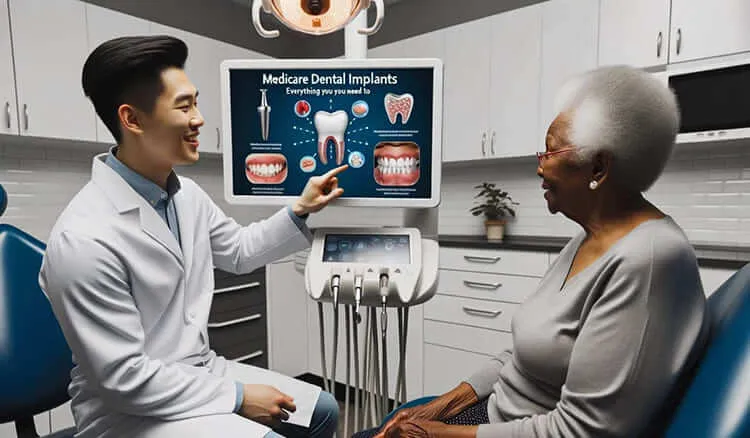
What are dental implants?
Dental implants are artificial tooth roots that are placed into the jawbone to support a replacement tooth or bridge.
They are a popular and effective solution for replacing missing teeth, as they provide a strong foundation for permanent or removable replacement teeth.
Unlike dentures, dental implants look and feel like natural teeth and can last a lifetime if cared for properly.
Does Medicare cover dental implants?
Medicare does not typically cover routine dental care, including dental implants.
Medicare Part A, which covers hospital insurance, may cover dental services that are necessary for a procedure covered under Medicare, such as jaw reconstruction after an accident or surgery to treat oral cancer.
Medicare Part B, which covers medical insurance, may cover certain dental services if they are performed as part of a covered medical procedure, such as extraction of teeth to prepare the jaw for radiation treatment.
However, most dental implant procedures are considered elective and are not covered by Medicare.
Does Medicaid cover dental implants?
Medicaid is a joint federal and state program that helps with medical costs for individuals and families with low incomes.
While Medicaid coverage for dental care varies by state, most states do not cover dental implants for adults.
However, some states may cover dental implants for children or individuals with certain medical conditions.
It is important to check with your state's Medicaid program to determine if dental implants are covered.
Are there any other options for dental implant coverage?
While Medicare and Medicaid may not cover dental implants in most cases, there are other options available for dental implant coverage.
Private dental insurance plans may offer coverage for dental implants, although coverage and eligibility requirements can vary widely.
Some discount dental plans may also offer reduced rates for dental implant procedures.
Additionally, some dental schools and clinics may offer reduced-cost or sliding-scale fee options for dental implant procedures.
It is important to explore all available options for dental implant coverage and discuss them with your dentist.
What are the costs associated with dental implants?
The cost of dental implants can vary depending on several factors, including the number of teeth being replaced, the complexity of the procedure, and the geographical location.
On average, the cost of a single dental implant can range from $3,000 to $4,500.
This cost typically includes the implant itself, the abutment that connects the implant to the replacement tooth, and the crown or bridge that replaces the missing tooth.
It is important to note that this cost does not include any additional procedures that may be necessary, such as bone grafting or tooth extractions.
It is recommended to consult with a dentist or oral surgeon to get a personalized cost estimate based on your specific needs.
What are the benefits and risks of dental implants?
Dental implants offer several benefits, including improved appearance, improved speech, increased comfort, easier eating, and improved oral health.
They are also a long-term solution for replacing missing teeth, as they are designed to last a lifetime.
However, like any surgical procedure, dental implants carry some risks.
These can include infection at the implant site, injury to surrounding teeth or blood vessels, nerve damage, sinus problems, and implant failure.
It is important to discuss the potential risks and benefits of dental implants with your dentist or oral surgeon before undergoing the procedure.
How can I find a dentist who offers dental implants?
To find a dentist who offers dental implants, you can start by asking for recommendations from your regular dentist or primary care physician.
You can also search for dentists in your area who specialize in dental implants using online directories or the websites of professional dental organizations.
When choosing a dentist, it is important to consider their experience, qualifications, and patient reviews.
You may also want to schedule a consultation to discuss your specific needs and to get a better understanding of the cost and time commitment involved in the dental implant process.
Conclusion
While Medicare and Medicaid may not typically cover dental implants, there are other options available for dental implant coverage.
Private dental insurance plans, discount dental plans, and reduced-cost options through dental schools or clinics can help make dental implants more affordable.
It is important to carefully consider the costs, benefits, and risks associated with dental implant procedures before making a decision.
Consulting with a dentist or oral surgeon can provide valuable information and guidance to help you make an informed choice and achieve a healthy, beautiful smile.